
Gratitude in Islam · 3 min read
Gratitude begins
with the
ordinary.
An ordinary meal. A particular kindness. A little room to notice.
The useful starting point
Where can you begin with gratitude?
Gratitude does not need an elaborate record. Start with a familiar moment, read what the source actually says, and keep your own practical response modest. This guide looks at a meal as one such moment. It does not prescribe a gratitude routine or promise a change in your circumstances.
A source before a system
In the Sahih International translation of Quran 16:18, people are told that they cannot enumerate Allah’s favors. The verse also names Allah as Forgiving and Merciful. We are referring to that stated meaning, without presenting a list or journal as its prescribed application.
A note you write can therefore remain a small personal observation. Do not present it as a complete account of blessings, a measure of your faith, or someone else’s religious instruction. You can also choose not to keep a written record at all.
Sahih Muslim 2734a, narrated by Anas ibn Malik, reports Allah’s pleasure with a servant who praises Him in connection with eating or drinking. That is the report’s stated scope. It does not establish our writing exercise, a required number of entries, or a promise of money, health, or an easier week.
Begin with what is actually in front of you
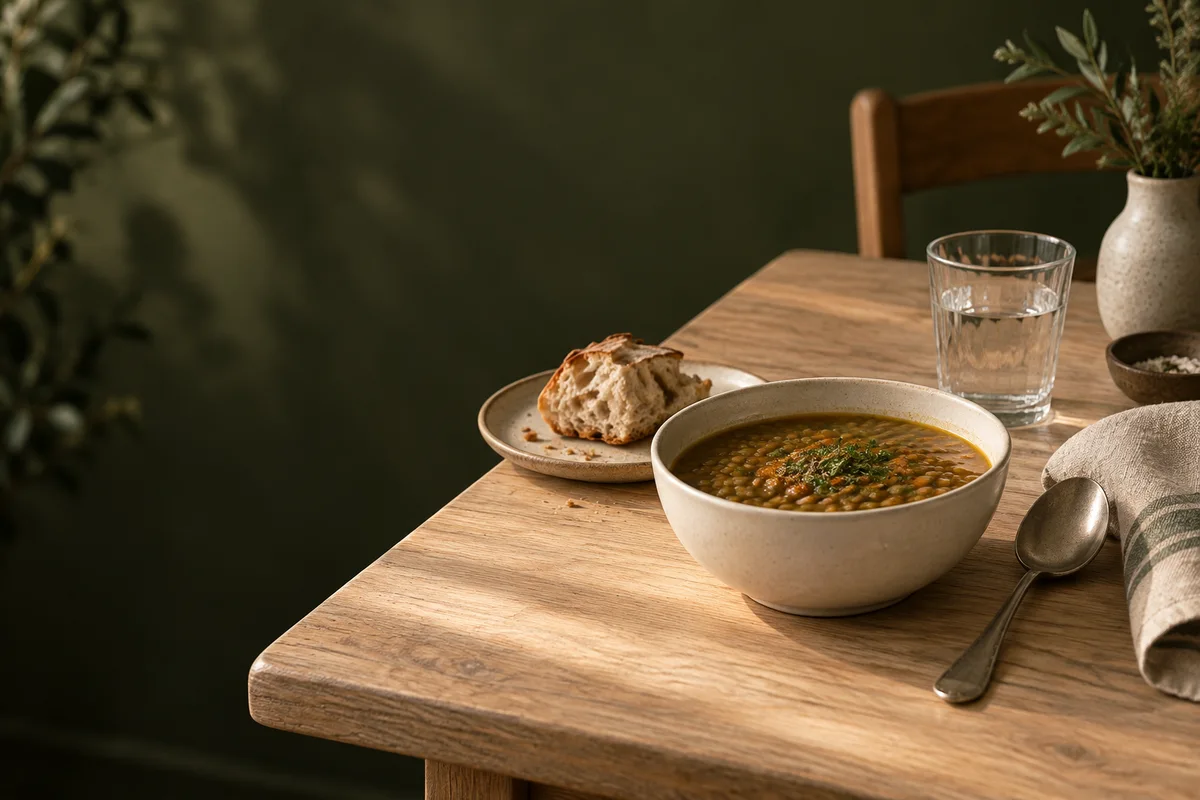
For an optional practical exercise, choose an ordinary meal. Notice something specific about it: the food itself, the person who prepared it, or the time someone made to sit with you. Keep your description grounded in what happened. You do not have to turn an ordinary event into a dramatic story.
The hadith gives the religious reference for praising Allah in connection with food or drink. Our suggestions about noticing details and thanking a person are ordinary practical ideas; this article does not attribute those particular steps to the hadith.
If you want the exact wording of a transmitted supplication or a ruling about your circumstances, consult a reliable source or a qualified teacher. This page does not invent a devotional formula.
An example, with its limits visible
The following is an invented illustration, not a reader’s testimonial:
A friend brings dinner after a long day. You might acknowledge the meal, praise Allah, and thank your friend for the particular help: “Thank you for bringing dinner. It saved me the preparation tonight.” You might offer to return the container when it is convenient.
The message and the offer are our suggested practical responses. They are not a quotation from scripture, a required sequence, or evidence of how grateful a person is. The report cited above supports the meal-related praise of Allah; it does not promise a particular reward for this message or for returning a container.
If you keep a note, plain wording is enough: “A friend brought dinner; I appreciated the help.” You do not need to score the day, post the note publicly, or make it sound more cheerful than you mean.
Leave comparison out of it
As an editorial suggestion, avoid turning this exercise into a comparison of households, spending, or how much other people appear to receive. Keep attention on the situation you can actually describe and the response you freely choose.
You can leave private details unwritten. You can notice something without photographing it. If your circumstances are difficult, this guide does not ask you to deny that difficulty or claim that a gratitude exercise will solve it. Seek the practical help you need; the page offers no diagnosis or treatment advice.
Keep the next step small
You might revisit the two references, thank someone for specific help, or simply notice the next meal without making a project of it. Choose a response that fits the situation. There is no prescribed streak, entry count, or app requirement in this guide.
For another kind of reading, our Quran reflection guide explains how to distinguish a personal reading note from a sourced explanation. It is a separate optional activity, not a requirement for gratitude.
Read the references
Keep the
source close.
Sources & review
Where this story comes from.
- Quran, An-Nahl 16:18 Quran.com / Sahih International translation. Meaning paraphrased; checked September 10, 2026. No journal format is prescribed here.
- Sahih Muslim 2734a Sahih Muslim / Sunnah.com. Narrated by Anas ibn Malik; Book 48, Hadith 123. Meaning paraphrased; checked September 10, 2026.
By the Deen Over Dunya team, the app’s publisher. Prepared through automated source checks; this article has not been reviewed by a qualified scholar and does not issue a fatwa. Read our Sunni editorial standards or send a correction with the passage and a reliable reference.